

QUICK SUMMARY
Retail and mixed-use developments rely on how a space feels at street level before it is built. High-end 3D renderings help developers, architects, and investors visualize foot traffic, storefront visibility, and real-world interaction. This article explains how immersive visualization improves design clarity, leasing efforts, and overall project success.
- Realistic renderings help stakeholders understand how people move through retail and mixed-use spaces
- Visual storytelling strengthens leasing, marketing, and investor presentations early in development
- Clear visualization reduces costly revisions by aligning expectations before construction
- Mixed-use projects benefit from renderings that connect retail, residential, and shared spaces
- Immersive perspectives make it easier for remote stakeholders to evaluate projects with confidence
Retail and Mixed-Use Visualization
Retail and mixed-use developments are designed around movement, visibility, and experience. What draws people in, where they pause, and how storefronts engage with passersby all shape the success of a project. Yet early-stage plans often struggle to communicate these dynamics in a meaningful way.
At Bowen Studios, we work with developers, architects, and marketing teams who need more than static representations. They need visuals that communicate how a space will actually function once it is active. When that level of clarity is missing, projects can face delays, uncertainty, and missed opportunities during leasing and approvals.
High-end renderings help bridge that gap. By showing how people interact with a space, they allow stakeholders to evaluate not just what a development looks like, but how it performs in real-world conditions.
The Challenge of Visualizing Retail and Mixed-Use Environments
Retail and mixed-use projects introduce complexity that goes beyond traditional architectural visualization. These developments must bring together multiple uses such as retail, residential, and public space, all while maintaining a cohesive and engaging experience at ground level.
One of the biggest challenges is communicating how people will move through the environment. Floor plans can show layout, but they rarely capture how a plaza fills during peak hours or how storefronts draw attention from passing foot traffic. Without that context, it becomes difficult for stakeholders to fully understand the intent behind the design.
Misalignment is another common issue. Developers, architects, leasing teams, and investors often interpret plans differently when visuals are limited. This can lead to delays in approvals, revisions late in the process, and uncertainty when presenting the project to potential tenants.
There is also a direct impact on leasing. Retail tenants are making decisions based on visibility, positioning, and surrounding activity. If those elements are not clearly communicated, it becomes harder to secure the right mix of businesses early in the project timeline.
How High-End Renderings Bring Foot Traffic to Life
The difference between basic visualization and high-end rendering becomes most apparent at street level. Retail environments are defined by movement, and capturing that movement requires more than placing a building into a scene.
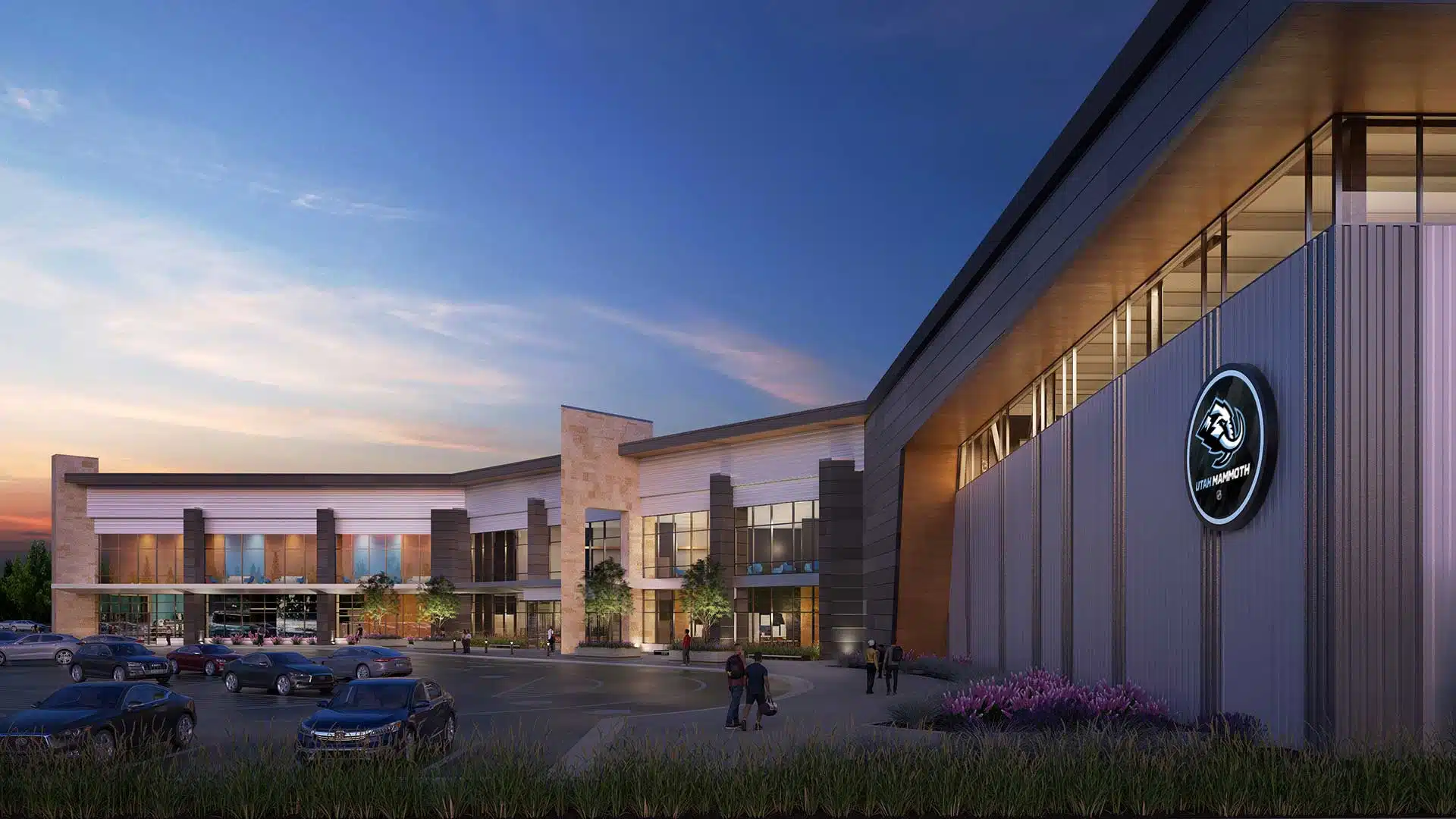
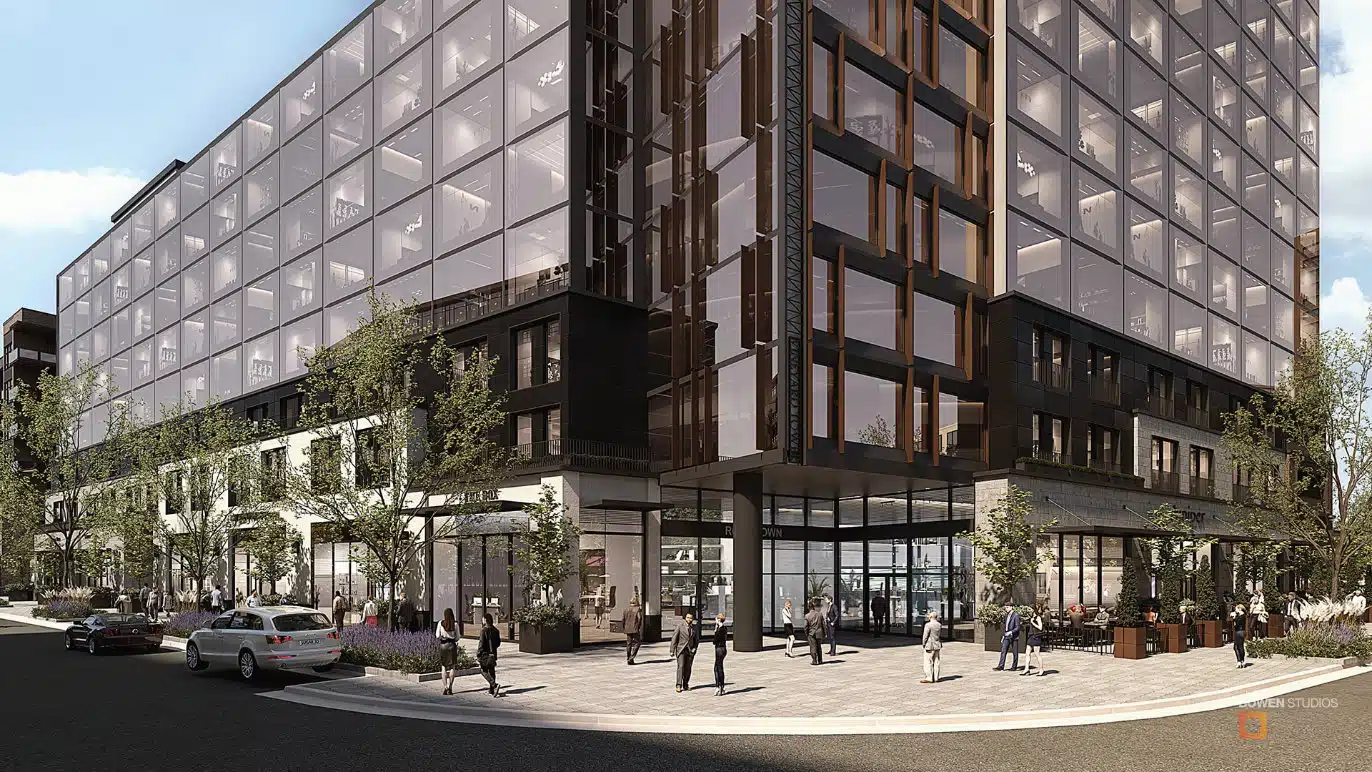
Detailed exterior architectural renderings incorporate people, lighting, signage, and environmental context in a way that reflects real-world conditions. Instead of viewing an empty space, stakeholders can see how individuals interact with storefronts, where natural gathering points form, and how pathways guide movement throughout the development.
This approach aligns with broader retail insights. Data from Dataplor shows that foot traffic is a key indicator of commercial performance, reinforcing the importance of understanding how people engage with a space before it is built.
When renderings reflect this level of detail, they shift from being purely visual assets to tools that help evaluate usability, visibility, and overall experience.
Connecting Retail, Residential, and Public Space
Mixed-use developments require a unified vision. Retail spaces cannot be considered in isolation, as their success is often tied to how they interact with surrounding residential units, office spaces, and public areas.
High-end renderings help communicate these relationships clearly. Street-level views can show how residents access retail areas, how open spaces encourage foot traffic, and how different components of the development work together as a single environment.
This level of clarity is especially important during design reviews. When stakeholders can see how each element contributes to the overall experience, it becomes easier to make informed decisions and maintain alignment throughout the project.
Supporting Leasing and Marketing Efforts
Retail leasing depends heavily on perception. Tenants want to understand not only where their space will be located, but also how it will perform within the larger environment. This includes visibility from key pathways, proximity to high-traffic areas, and the overall atmosphere of the development.
Renderings that include storefront detail, signage integration, and realistic lighting provide leasing teams with a stronger foundation for conversations with prospective tenants. In addition to street-level views, interior architectural renderings help tenants understand how their space will feel from the inside, including layout, lighting, and customer experience. Instead of describing the opportunity, they can show it in a way that feels tangible and immediate.
The same applies to marketing. Visual content plays a central role in how developments are presented to investors and the public. Insights from Littlegate Publishing highlight how 3D rendering strengthens real estate marketing by helping audiences engage with projects before construction begins.
When visuals are clear and engaging, they support stronger interest and more confident decision-making across all audiences.
Improving Design Clarity and Reducing Revisions
Clear visualization has a direct impact on how efficiently a project moves forward. When stakeholders can fully understand a design early in the process, it reduces the likelihood of major revisions later on.
Renderings allow teams to evaluate key elements such as scale, material relationships, and sightlines in a way that drawings alone cannot provide. This makes it easier to identify potential issues and address them before they become costly problems during construction.
They also improve communication across disciplines. Architects, developers, and consultants can reference the same visual context, which helps ensure that decisions are made with a shared understanding of the final outcome. These solutions are often part of a broader visualization strategy that can include a range of 3D rendering services depending on the needs of the project.
Basic vs High-End Retail Rendering
Not all renderings serve the same purpose. The level of detail and realism can significantly influence how effective they are in supporting a project.
- Basic renderings focus on form and layout, often with limited environmental context and minimal attention to lighting or human interaction
- High-end renderings incorporate real-world conditions, including people, materials, lighting, and atmosphere, to communicate how a space will be experienced
- Basic visuals may support internal design discussions, while high-end visuals are suited for leasing, marketing, and investor presentations
This distinction is important because retail and mixed-use projects rely heavily on experience. When that experience is not clearly communicated, it becomes more difficult to achieve alignment and momentum.
The Business Impact of Strong Visualization
Investing in high-quality renderings supports measurable outcomes across the lifecycle of a retail or mixed-use development. Clear visuals help accelerate approvals by giving stakeholders confidence in the design. They also reduce the need for revisions, which can save both time and cost.
From a business perspective, realistic renderings strengthen leasing efforts by helping tenants understand the opportunity in context. They also support investor presentations by providing a clear and compelling view of the project.
When a development is presented as an active environment rather than a conceptual plan, it becomes easier to build momentum and move forward with greater certainty.
Making Projects Accessible Through Immersive Experiences
One of the most valuable aspects of modern visualization is accessibility. Stakeholders are not always able to visit a site or attend in-person presentations, especially in the early stages of development.
Immersive tools such as virtual tours allow stakeholders to explore a project remotely while still gaining a clear understanding of how it will feel in real life. Tools like architectural animation further enhance this experience by showing movement, transitions, and how people interact with a space over time. This is particularly useful for investors, tenants, and partners who need to evaluate the space from different locations.
By making the experience accessible from anywhere, these tools expand the reach of a project and improve communication across all involved parties.
Work With Bowen Studios to Bring Your Vision Into Focus
At Bowen Studios, we approach retail and mixed-use rendering with a focus on how spaces are experienced, not just how they look. Our goal is to help you communicate movement, visibility, and atmosphere in a way that supports design decisions, leasing strategies, and investor confidence.
If you are planning a retail or mixed-use development and need visuals that reflect real-world conditions, consider taking the next step and reaching out to Bowen Studios to discuss your project. A well-executed rendering strategy can help bring clarity to complex ideas and move your project forward with confidence.
That clarity carries into the following questions many clients have before getting started.
FAQ
What makes retail and mixed-use renderings different from standard renderings?
They focus on human interaction, storefront visibility, and environmental context. The goal is to show how people move through and experience the space, not just how it looks structurally.
When should renderings be created in a project timeline?
Renderings are most effective during early design and pre-construction phases, when they can support approvals, investor presentations, and leasing efforts.
Are high-end renderings worth the investment for smaller developments?
Even smaller projects benefit from clear visualization. Strong renderings can improve marketing efforts, reduce revisions, and help stakeholders make faster, more informed decisions.
Sources
- Dataplor. Foot Traffic Trends and Insights. https://www.dataplor.com/resources/blog/foot-traffic-trends/
- Littlegate Publishing. How 3D Rendering Is Revolutionizing Real Estate Marketing. https://www.littlegatepublishing.com/2024/08/how-3d-rendering-is-revolutionizing-real-estate-marketing/